Crawl space care
Crawl Space Encapsulation
A practical way to reduce ground moisture and humid air beneath your home.
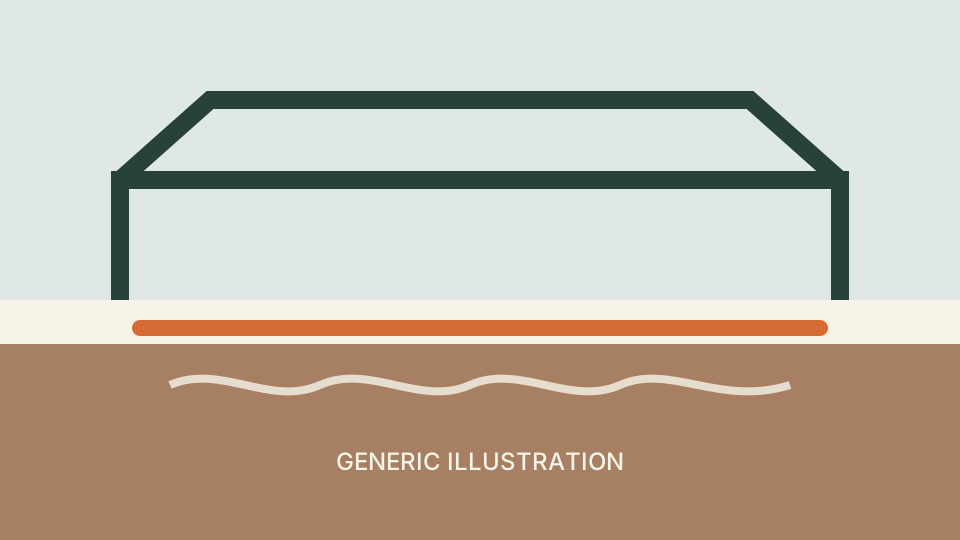
What encapsulation means
Crawl space encapsulation typically means separating the crawl space from exposed soil and uncontrolled outside air with a continuous vapor barrier and carefully sealed surfaces. That does not mean every crawl space receives the same materials or the same layout. Wall construction, piers, access doors, vents, plumbing, ductwork, drainage, and existing insulation all affect the details. Before installation, moisture sources and standing water should be addressed so the finished system is working with the structure instead of covering up an unresolved problem.
Moisture control
Reducing moisture can help protect floor systems, insulation, stored materials, and the condition of the crawl space itself. Moisture can arrive as vapor through exposed soil, liquid water through cracks or low areas, humid air through vents, or condensation on cooler surfaces. Those sources call for different responses. Finding the source first makes the work more useful and helps avoid treating a symptom while water continues to enter from somewhere else.
Vapor barriers
A vapor barrier is a continuous membrane placed over exposed soil to reduce moisture vapor entering the crawl space. The installation may include overlapping and sealing seams, turning the material up walls or piers, and carefully working around plumbing, supports, access points, and other penetrations. The correct coverage, attachment method, thickness, and termination details depend on the space and the surrounding construction. A barrier is only one part of a moisture-control plan when drainage, leaks, or high humidity are also present.
Crawl space insulation
Insulation may be part of an encapsulation project, but it should be considered alongside moisture and air movement rather than treated as a standalone fix. The foundation type, climate, code requirements, existing assembly, ductwork, pipes, and risk of condensation all matter. Placement and R-value should be selected for the home, and damp or damaged insulation may need attention before new materials are added.
Start with a conversation
Call with questions about moisture, odors, damp insulation, standing water, condensation, or a musty crawl space. It helps to share when you first noticed the issue, whether it changes after rain or humid weather, and whether you can see water, damaged materials, or gaps around vents and access doors. Those details can make the next conversation more productive.